
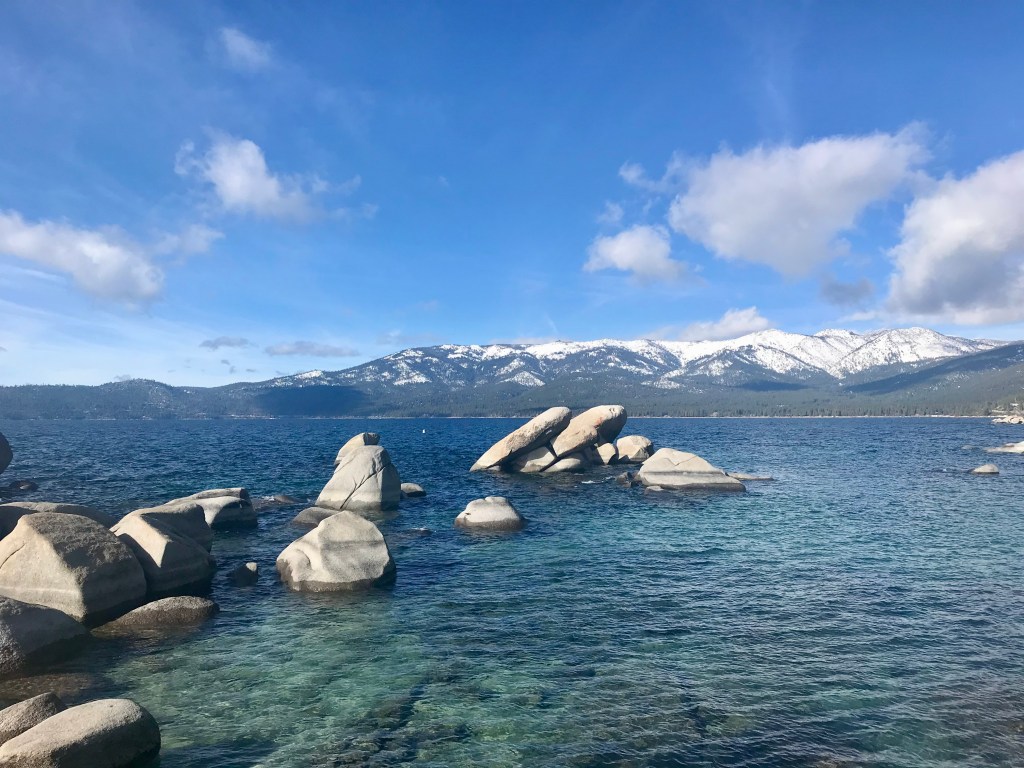
Northern California– no, not San Francisco, Santa Cruz, or Monterey, but the proper North– is a rural, rugged gem with so much natural variety. Significantly less populated and explored than its southern neighbors, many prioritize more popular sections of the golden state. But as a “real” Nor-Cal native (who now resides in Los Angeles), I promise you there’s so much to experience in the North State that you just can’t get in the South!
It’s classic California beauty with fewer crowds– what’s not to love??
As a Nor-Cal native, I’ve had the pleasure of exploring these destinations many times over, each season offering something unique and new. Join me as I take you through the must-see stops, activities, food, and lodging on this week-long road trip through the beautiful California North State!
When Should I Go?
Unlike Southern California or the Bay, the weather in the North mimics a more “traditional” pattern with identifiable seasons. That being said, you’ll be traveling through mountainous areas, as well as valleys and coastal regions, so you’ll likely need to pack for multiple seasons.
This road trip can be adapted for every season, because there really is no bad time to go. For this reason, this post will cover the pros and cons of exploring Nor-Cal during many different seasons.
For the most temperate weather all around, I suggest late March-June and late September-November as the most ideal time to road trip. If you’re going for for winter, January-early March is your best bet for skiing and snow.
Winter
3 different mountains to explore, including 2 ski resorts. Cold and cozy. I highly suggest visiting in winter if you are prioritizing any snow activities. Be prepared for road closures and delayed travel time (you’ll also need chains for your tires).
Summer
The most popular time to visit, prices may be higher all around. Endless water-based activities to do (swimming, boating, jetskiing, kayaking, etc). Fire season usually peaks in August and September.
Spring
The best of both worlds— there may still be snow up in the mountains depending on what month you visit, but the weather should be generally temperate all around. Flowers are blooming and wildlife is more active. Minimal tourists. Perfect time for white water rafting.
Fall
A great shoulder season with minimal tourists as long as you’re not adventuring around a holiday. Potential for snow on the mountains, but temperate elsewhere. You’ll see lots of changing colors on the leaves.
Map Of Nor-Cal Itinerary
Is This Road trip for me?
Anyone who enjoys a wide variety of natural landscapes, wildlife, and activities will love this journey. By no means do you need to be a camper or outdoorsman to enjoy this itinerary!!! I’m a firm believer that these spaces deserve to be admired by anybody at any activity level– as long as you treat the land with respect.
You don’t need to sacrifice basic comforts to experience the great outdoors, either! In my 30s, flushing toilets rank pretty high on my priority list. Every recommended lodging stop on this itinerary is indoors with standard creature comforts (and more, in some locations). Bear in mind, however, that most of the suggested hotels are not considered luxury stays. And should you prefer to camp instead, by all means, do!
Tips before you go:
- Download this google map itinerary before you go. Service can by spotty, particularly as you drive through the mountains.
- Campsites are a convenient alternative in some of the more remote areas of the trip (Mt. Lassen in particular), but I promise this whole itinerary can and will be done without camping! I’ve done it myself. If you choose to camp, be sure to book campsites well in advance. They don’t fill up as fast as sites further South, but for prime locations (like Patrick’s Point), I wouldn’t delay.
Nor-Cal 7 day itinerary
Day 0 – Arrival
Start: Sacramento Airport
End: Lake Tahoe
Drive Time: 2 hrs 15 min from Airport
Our starting point begins at Lake Tahoe. For those flying, Sacramento is the most accessible international airport to the area. You’ll need to rent a car once you arrive.
This roadmap schedule also applies if you’re driving in from Southern California. For those driving down from the North, however, I suggest starting the itinerary with the Mt. Shasta stop.
What To Do
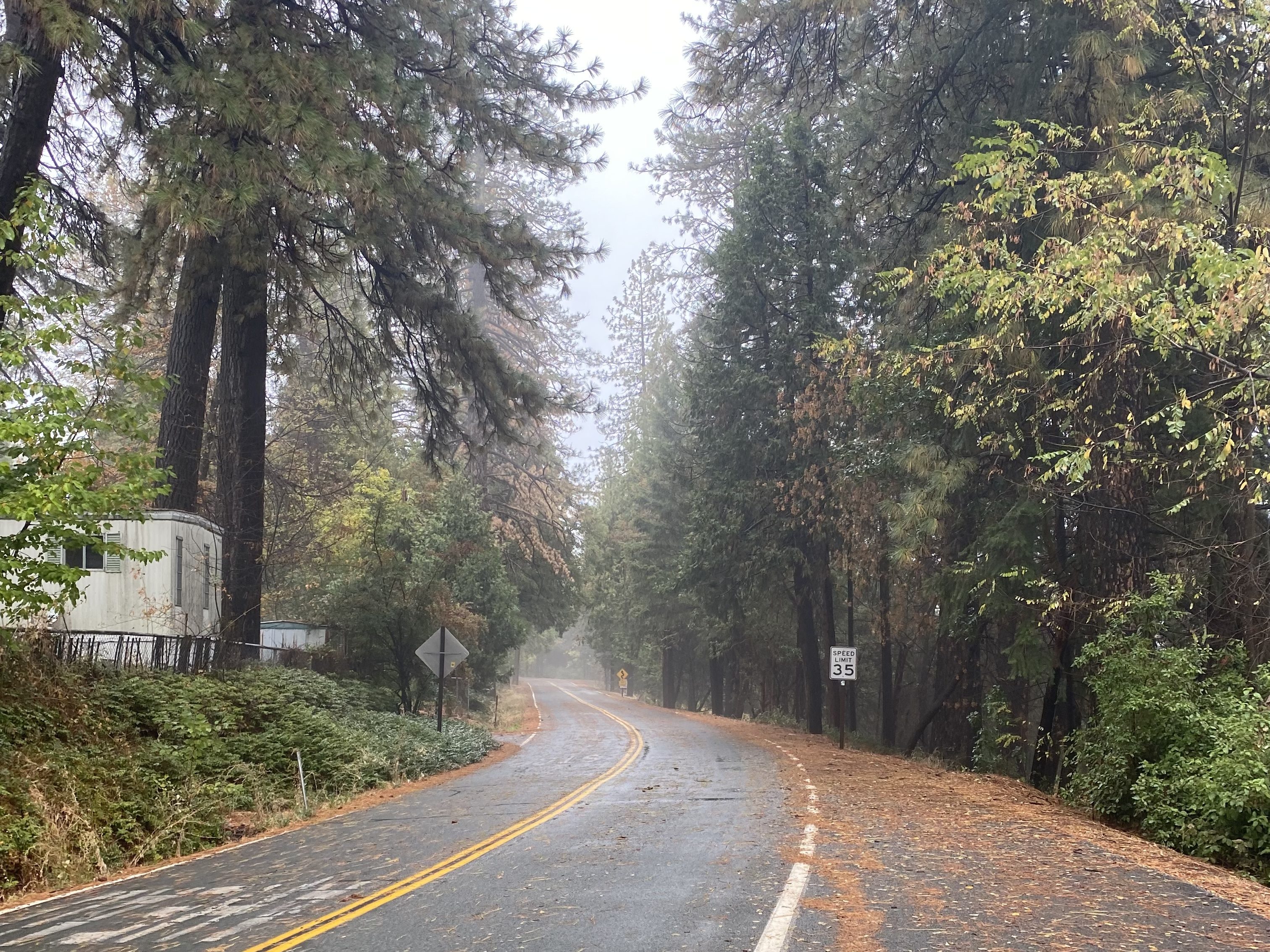
If you’re looking for a pit-stop on the way from Sacramento to Tahoe—Placerville is a charming Gold Rush town with lots of shops and restaurants to peruse. If you’re coming in the fall, you MUST make a stop at Apple Hill for excellent apple picking, cider donuts, and the works. See the photo above for the kind of foliage (and vibe) you can expect.
If you make it to Truckee before sundown, stop by Donner Summit Overlook for views of Donner Lake. Truckee is also a great pit-stop for dinner.
Day 1 – Tahoe
Start: Lake Tahoe
End: Lake Tahoe
Drive time: 0 minutes
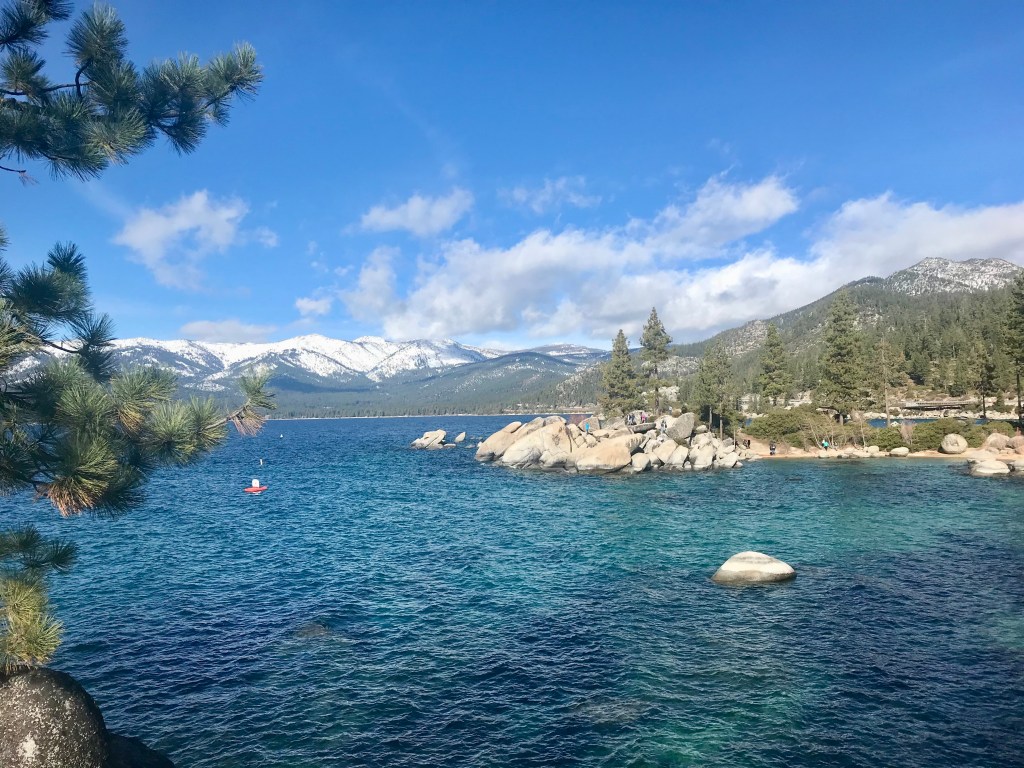
Tahoe is the most visited stop on our itinerary, and it’s immediately obvious why. Home to the titular Lake Tahoe, its crystal-clear waters are framed by 3 major mountain ranges and dense forest. If the scenery doesn’t take your breath away, the water temperature will!
If you have the time to spare, I would consider giving yourself an extra day here. There’s just so much to see and enjoy. If you’re short on time, don’t worry, you’ll still clock the highlights.
What To Do
Emerald Bay State Park
Emerald Bay, located on the South Shore, offers some of the most iconic views of Lake Tahoe. Here, you’ll get 180 degree sightlines of the surrounding mountain range, particularly at Inspiration Point.
Hike down to the sandy beach at the bottom of the hillside. Note that this is a relatively steep one-mile trek. Not so bad on the way down, but it’s a climb coming back up with coolers and backpacks. I would pack light for this excursion! At the waterside, you can rent Kayaks and canoes from Kayak Tahoe.
Emerald Bay is well-known for a reason and absolutely packed during peak summer time. Hit it early!
Sand Harbor
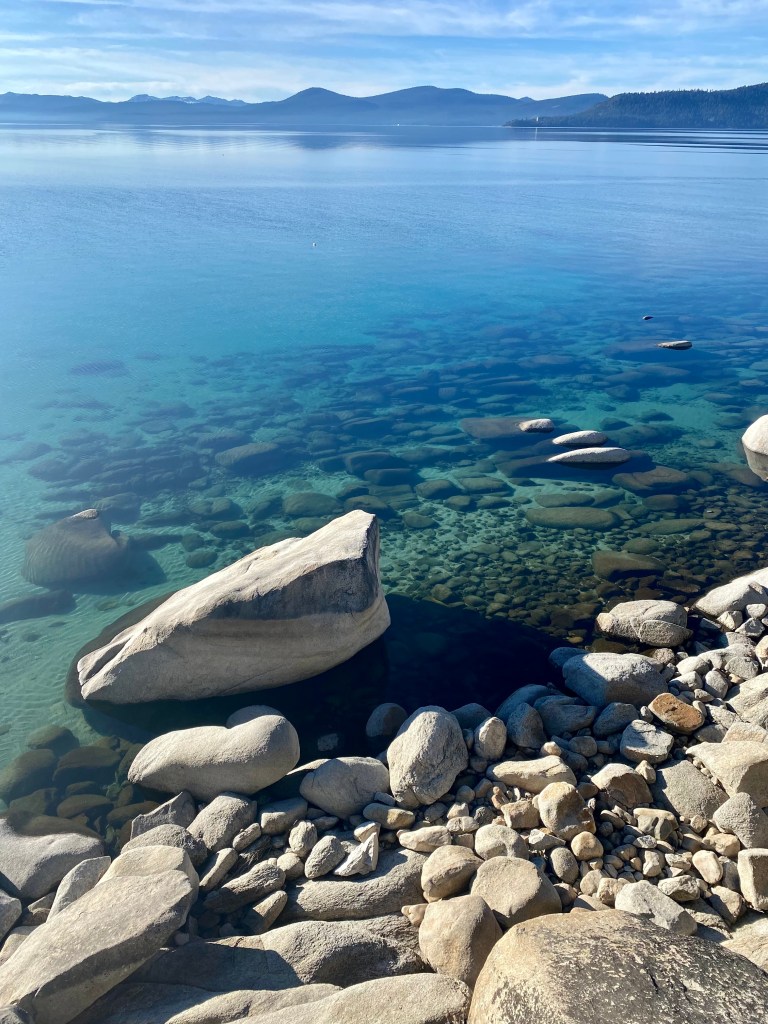
A picturesque stop if there ever was one, showing off Tahoe’s crystal clear waters and round, granite rock formations. It’s located on the North East side of the lake (our one foray across state-lines into Nevada). This is an ideal spot for swimming (if you’re brave enough) and easy to access. For that reason, you MUST come early to obtain a parking spot. If you’re not an early-bird, try again around 4 pm for sunset– the NE side of the lake has the best views for sunset because it is west-facing.
For similar views and less of a crowd, stop by Chimney Beach instead. It requires a small hike to access it.
Pope Beach
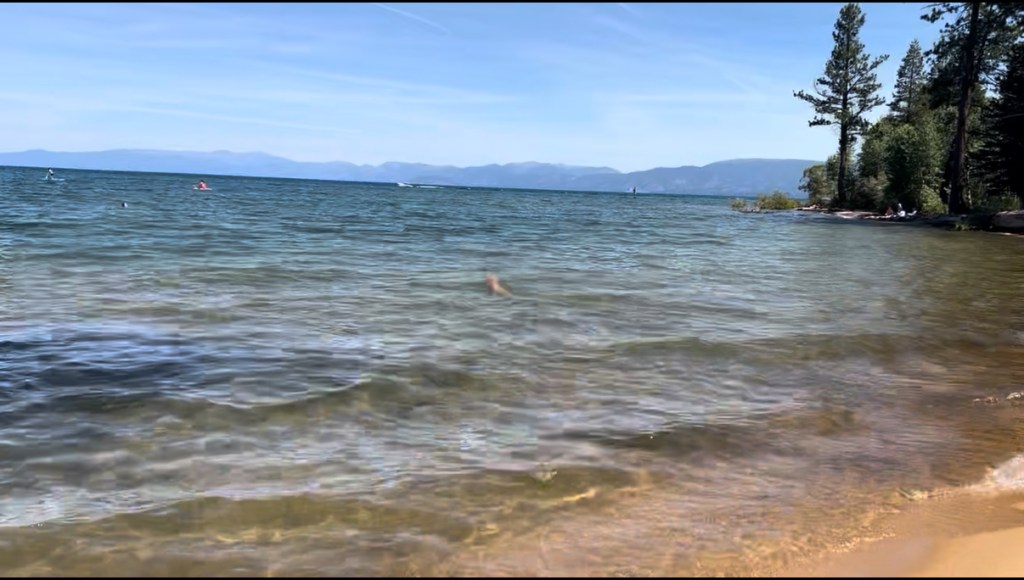
Another popular must-stop is Pope Beach, located in South Lake Tahoe and close to town. The views may not be as noteworthy, but if you’re looking for a place to swim, it has a long, sandy shoreline that’s easy to access.
Kayaking and Stand Up paddle boarding are very popular on Lake Tahoe, and you’ll see many taking off from Pope Beach. Stop by Kayak Tahoe on the water’s edge to rent your own for a few hours.
Hike Eagle Lake Trail (and Falls)
If you’re anything like me, you’re looking for an easy to moderate hike that offers a true reward at the end. In my opinion, that makes Eagle Lake Trail one of the best in California (yeah, I said it)!
The path is 2ish miles long with about 400 ft elevation gain on a well-maintained trail, suitable for most hikers and skill levels. You’ll come upon Eagle Lake Falls first, which is a stunning reward in and of itself. But keep pushing to the top– the views of the lake are icing on the cake.
Heavenly
If you’ve made it to Lake Tahoe in the winter time, chances are you’re making a stop at one of the most famous Ski resorts in all of California– Heavenly. If you’ve made the decision to visit Lake Tahoe during snow season, you’d better be hitting the slopes! At the minimum, you must try snow-tubing.
For all other seasons, take the 2.4 mile scenic Gondola ride to the top of the mountain for panoramic views of the South Lake. They also offer other “adventures” at the summit like the coaster, summer tubing, and rock climbing. Note that tickets are expensive! While fun, if you’re on a tight budget, I don’t think it’s worth the 100$ pricetag.
Other Activities:
- If you’re into Casinos/Casino Culture, you’ll be very happy here in South Lake Tahoe (the Nevada side!). If you don’t gamble, it’s fun to take a peak, but not a must-hit.
- Lake Tahoe Boat Cruises. There are many different options including daytime, sunset, and dinner cruises to choose from.
- Take the Tahoe East Shore trail, hiking from Incline Village to Sand Harbor. It’s an easy 3-mile trek that runs along the shoreline of the lake.
- Horseback ride through the forests.
- Spas! See my wellness section below for details.

Food recommendations
Inclined Burgers (North Shore)
Drink Coffee Do Stuff (North and South Shore)
Cuppa Tahoe (South Shore)
Red Hut Cafe (South Shore)
Edgewood restaurant for upscale eats (South Shore)
The Getaway Cafe (South Shore)
Bridgetender Tavern and Grill (West side)
Pianetas (Truckee)
Where to stay
Lake Tahoe offers a range of accommodations from “budget” to five-star luxury. If you’re staying at least two nights, Airbnb or VRBO is a popular option (do note that the year-round community has been cracking down on these types of rentals). It’s important to mention that Lake Tahoe is nor a cheap destination to visit. For the best prices, I suggest coming in during the shoulder seasons (spring and fall) and booking well in advance.
I like North Lake Tahoe for the serenity, but South Lake Tahoe is much closer to the majority of our can’t miss stops. The South Lake will also have more nightlife options–
North Lake Options:
Cedar Glen Lodge – I highly recommended if you choose to stay in the North, good mid-range option with a cabin vibe.
Crown Motel – a budget option without sacrificing much– it’s also right on the lake.
South Lake Tahoe Options:
The Landing Resort and Spa -a fantastic, moderate splurge! It’s cozy, maintaining the cabin-aesthetic, right off of the water.
Edgewood Tahoe Resort – If you’re looking for luxury and you’re not afraid of a price tag, Edgewood it is.
Basecamp Tahoe South – More of a budget option, with a youthful, social energy.
Bluelake Inn at Heavenly Village – Budget option, close to the action.
Wellness activities and tips
- There are unlimited high-end spa options in the area if you’re willing to shell out the cash. Check out Edgewood for a splurge or Elements Spa for more moderate pricing.
- Sage Leaf Café (North Shore) for healthy eats.
- Tahoe Forest Bath, with their signature Japanese Cedar Detox. There are only two locations in all of the United States that offer Japanese Cedar Baths– I haven’t had the pleasure of trying it, but the reviews speak for themselves.
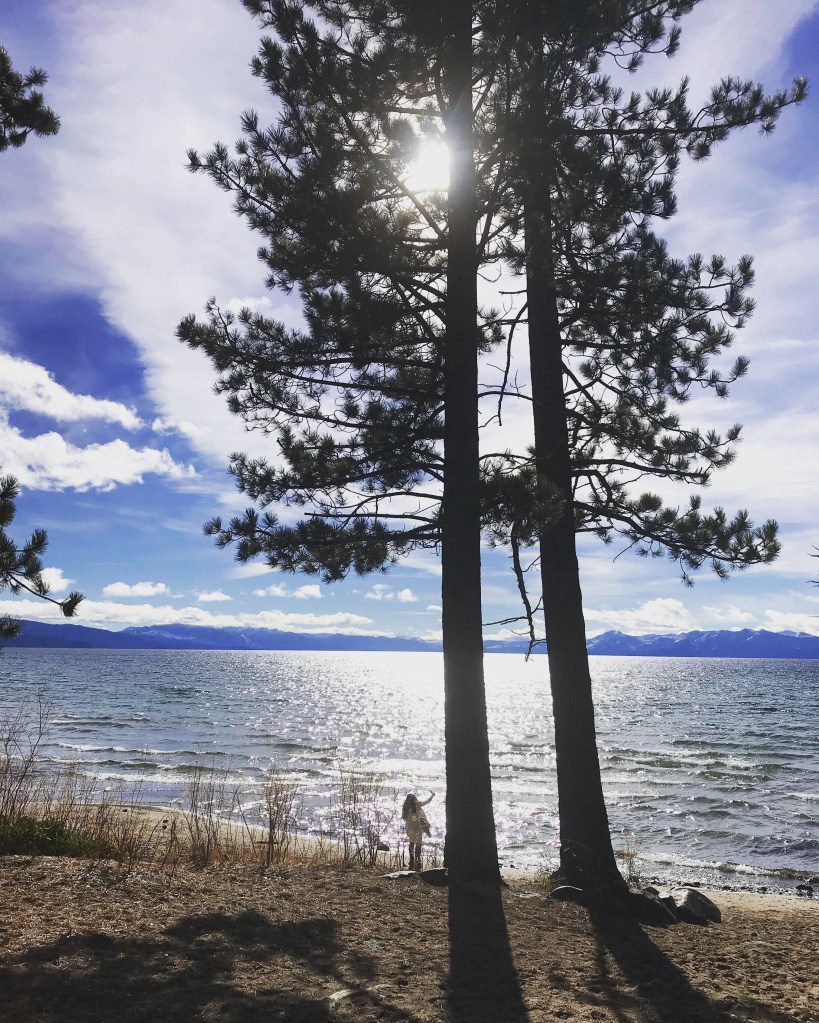
- Hidden beach for a great morning meditation. Arriving early in the morning makes this a perfect spot to catch the sunrise, too.
- Tip: Remember altitude sickness is real. Personally, I’ve never had issues staying in the village areas of Tahoe, but the higher up you go (and the longer you stay at those elevations), the more noticeable the effects can be. Be prepared to feel a bit more out of breath while hiking, especially as you gain elevation.
Day 2 – Mt. Lassen
Start: Tahoe
End: Lassen Volcanic National Park
Drive Time: 3 hours
Note: Highway 89 is open from May-October depending on snowfall. In winter, however, this road is often closed– this will significantly affect your drive time. Make sure to check road information before you go!

Lassen is a 10,457 ft active volcano. It boasts views akin to Yosemite and thermal activity similar to Yellowstone with significantly less crowds. It’s shocking to me how sparse Lassen can be, considering everything the park has to offer! It was designated the first National Park in the US for volcanic activity in 1916– one year later, the 1917 eruption changed the entire landscape of the area.
What to do
Bumpass Hell Trail (3 miles round trip, easy -mostly boardwalk).
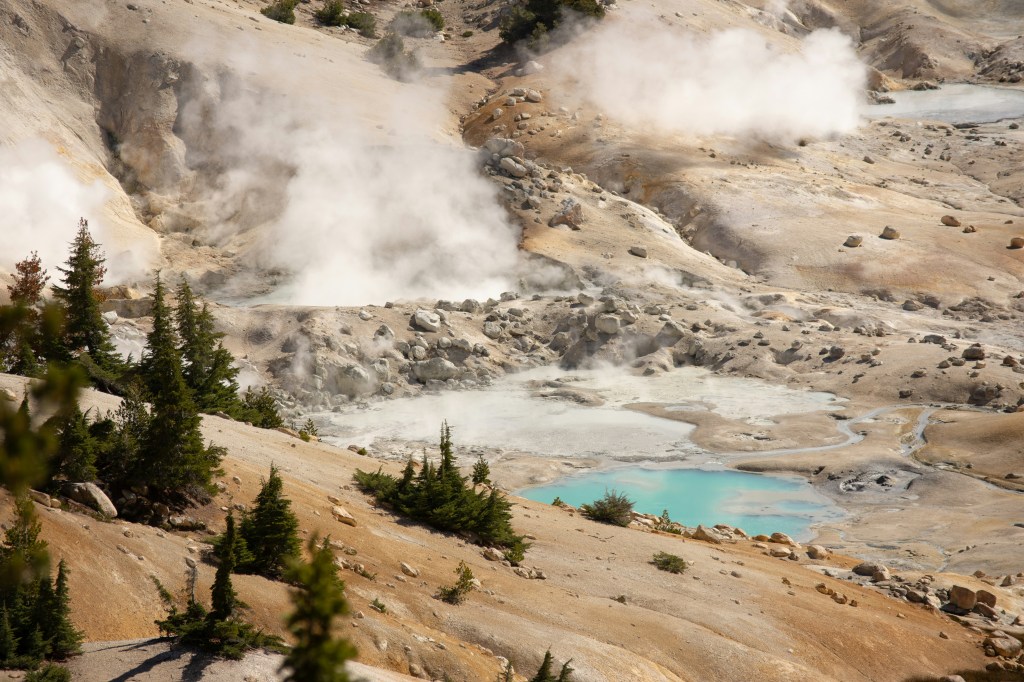
This basin is so other-worldly and scenic in its own right. Expect to see boiling mid-piles, geothermal steam vents, and orange/yellow discoloration in the landscape. This is a do-not-miss, easy hike/walk full of geothermal features– just don’t fall in!
Sulphur Works
Another great (and easy) pit-stop to see bubbling mud pots and steam vents. You will be surrounded by steam and, of course, the stench of sulfur– which smells a lot like rotten eggs.
Manzanita Lake
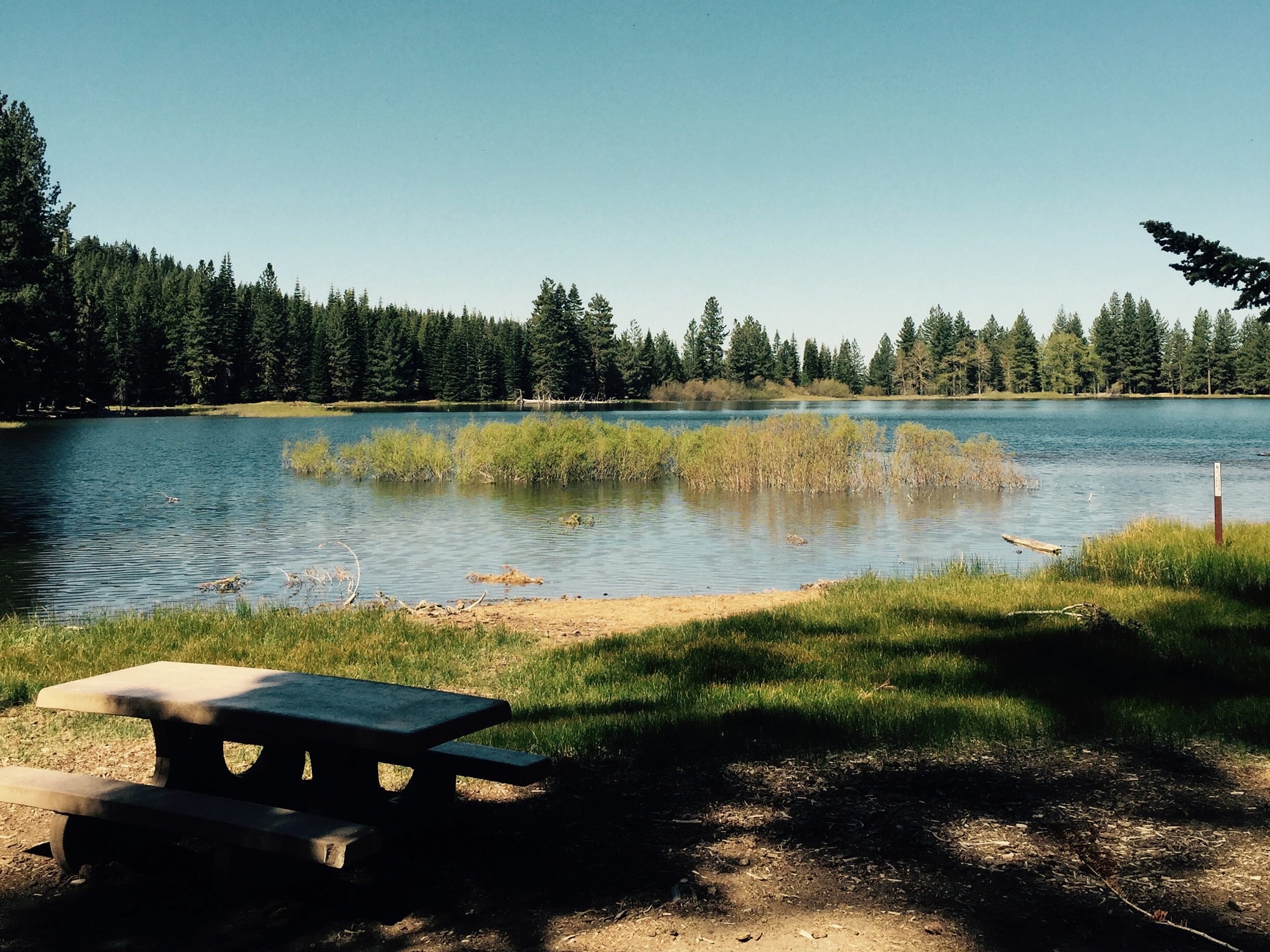
One of the great things about Lassen is its diversity– it isn’t all volcanic landscape! Take a 1-mile walk around the lush Manzanita lake with cinematic views of Mount Lassen (especially when the mountain is still snow-kissed). This is a great stop for a picnic.
Kohm Yah-Mah-Nee Visitor’s Center
extensive info about the park’s history and geology. Mt. Lassen last erupted in 1917, devastating the surrounding area and dramatically altering the landscape (we’re talking the works—lava flows, mud flows, ash fall. The ash affected communities over 200 miles away!) Also check out the Devastated Area if the eruption is of high interest to you.
WHERE TO STAY
I’m going to be honest with you.. a good hotel is hard to find out here. In the area, you’ll find mostly budget-option stays, perfect for your pocket book so you can indulge elsewhere! If you have camping equipment with you, this is the ideal time to set up shop, with plenty of affordable options (my favorite spots are around Manzanita Lake), and within the park itself.
- Mineral Lodge is the closest motel to the park—15 miles away from the entrance with true motel energy. As one of the cheaper options, it is particularly no frills, but proximity and price are ideal.
- The Village at Highlands Ranch is ideal if you want slightly more comfortable facilities and you’re willing to pay an extra 20-30$ a night. These lodges are equally close to the entrance.
- For a higher-end stay nearby, Highlands Ranch Resort is beautiful and serene (but you must be willing to pay 300$ for a night). –Backtrack to Chester or Lake Almanor for many more options (cabins on the lake, motels, hotels, etc.)
- Backtrack to Chester/Lake Almanor for many more options (cabins on the lake, airbnbs, motels, hotels, etc.)
FOOD RECOMMENDATIONS
Aslan’s Mediterranean Grill (Chester)
Buffalo Chip’s Pizza (Chester)
JJ’s cafe (Lassen)
Mineral Lodge (Mineral)
Shingletown Grocery Store for picnic supplies
WELLNESS ACTIVITIES AND TIPS
- As mentioned above, Geothermal areas can give off a strong egg-like odor, particularly in the highly active areas like Bumpass Hell and Sulfer Works. Sensitive smellers beware.
- Lassen has significantly less visitors than other National Parks. Aside from Bumpass Hell during peak season, there’s no need to worry about fighting for parking spots or crowded trails.
- Star-gazing – due to its remoteness and minimal light pollution, Lassen offers FANTASTIC stargazing opportunities.
- This area will be the most remote location on our list– take advantage of the quiet! I highly recommend s’mores around a campfire.
DAY 3 – Burney and Shasta
Start: Lassen
End: Mt. Shasta
Stops along the way: Burney Falls
Drive Time: 1 hr 45 minutes
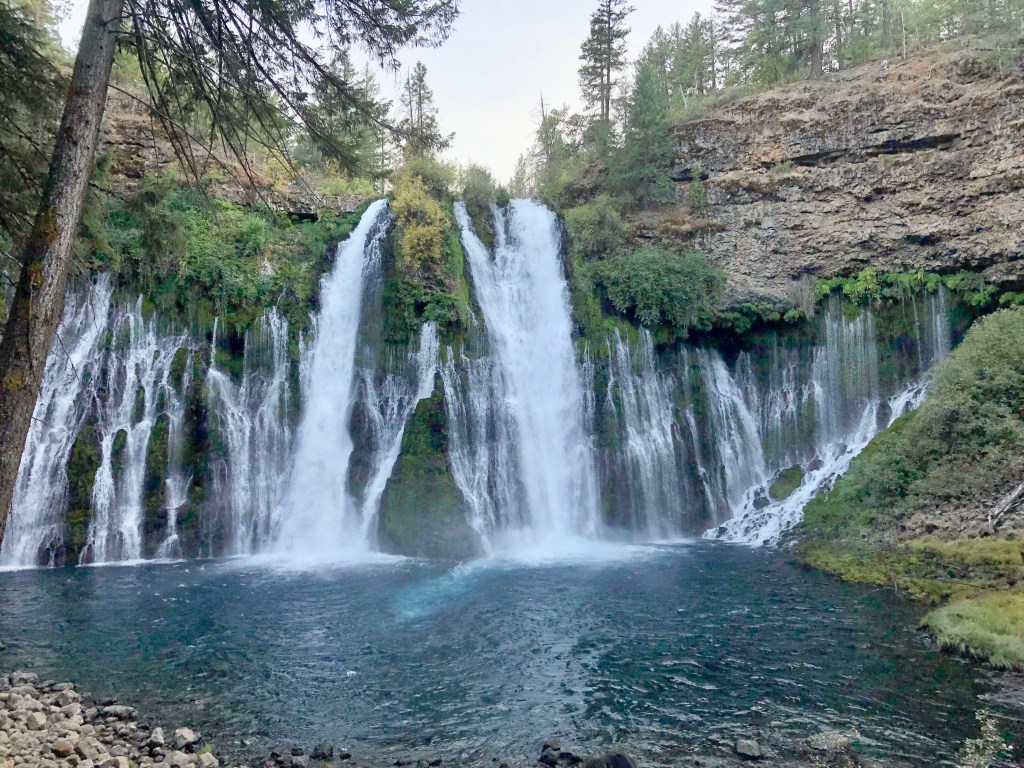
As you’ve no doubt realized by now, we’re in remote territory! It makes for quiet, untrodden paths (even in the summer months) as well as limited gas station and restaurant options. Be sure to plan accordingly as you head from Lassen up to the hidden gem that is Burney Falls.
After the falls, you’ll continue on into another less-trodden domain– Mount Shasta. With a charming, “hippie” town vibe, fantastic views, and an affordable ski resort, Mount Shasta truly offers something for everyone.
McArthur-Burney Falls Memorial State Park
A must-stop! With clear blue waters set against dark volcanic rock, Burney has one of the most beautiful waterfalls in all of California (and I’ve lived and explored all over the state). Take the easy loop trail (1.2 miles, easy hiking) for the best views. This waterfall flows year round, even in the dry months.
McCloud Falls
A set of 3 different waterfalls, all accessible by a short, easy trail. The Lower Falls are close to the parking lot and require no hiking, but the Upper Falls are the most impressive of the three.
Mount Shasta Ski Park
If you’re visiting during the winter or early spring, I highly recommend skiing or snowboarding at Mt. Shasta Ski Park. Significantly cheaper and less crowded than other mountains in California (here’s looking at you, Heavenly), it’s absolutely worth the stop. You can rent all your gear at the lodge.

Downtown Mt Shasta
A charming town located at the base of Mount Shasta. The community is known for outdoor recreation as well as their spiritual community (fun fact: The “Love Has Won” cult was stationed here for a long time). Many claim the area is an energy vortex, others believe it’s ideal for UFO sightings. If we’re still using the word “hippie”, I would apply it to the city of Mount Shasta.
Weed
15 minutes up the road is iconic Weed, CA. It has a great viewpoint of the Mountain and kitschy shops to buy marajuana-themed souvenirs.
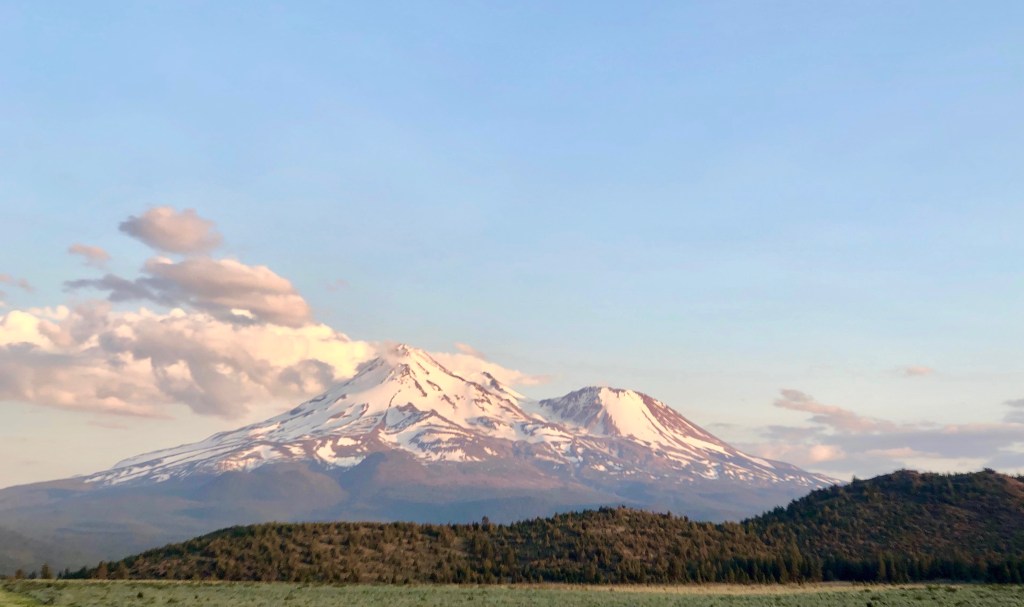
White Water River Rafting
If you’re interested in elevating your outdoor game, you’re in the right spot. Mount Shasta is a great jumping off point to access the Upper Klammath River, particularly in spring during the snowmelt. With 3 and 4 level rapids, it’s adventurous but not tumultuous. I went as a teenager and it’s one of my fondest family memories.
Where to stay
Basecamp Lodge – Very affordable, cute, and in a great location. Make sure to book in advance (note: as of now, there is a two-night minimum.)
McCloud River Bed and Breakfast – A beloved, relaxed B&B in the area with a particularly yummy breakfast.
Or Check out Airbnb for some cozy cabin options like this!
Food recommendations
Alpine Drive-In
Hari Om Shri Ram | Indian Cuisine
Seven Sons Coffee and Cafe
Mike and Tony’s Restaurant
WELLNESS ACTIVITIES AND TIPS
Though the town may be a little “woo-woo” for some, I wouldn’t write it off. It’s an under-the-radar gem for holistic healing. In fact, Mount Shasta is where I first discovered naturopathy as a teenager, a concept I hadn’t even heard of before. That experience transformed my understanding of self-care and and the medical system.
Sacred Mountain Spa – A cozy spa along Lake Siskiyou. They are one of the best in the area and offers a multitude of treatment options.
Mt Shasta Crystal Room- A large crystal and gemstone store, run by Mt. Shasta locals. If you’re looking for any spiritual artifacts, you’ll find it here. If you’re not in the market, it’s still worth a stop!
Mt. Shasta Retreat – Go on spiritual tours around Mt. Shasta to the many sacred sites. This tour is designed around your preferences and what you wish to get out of the experience, including hiking, meditations, and more.
Lemurian Sound Healing class- Every Saturday from 7-8 pm at the Blue Star Child Gallery (be sure to secure your spot in advance!)
DAY 4 – Redding
Start: Mt. Shasta
End: Redding
Drive time: 1 hour

Redding! My hometown. I know this place like the back of my hand, and all the eccentricities that come with it. The population is a bit… odd (i.e. fringe, conservative), but with panoramic, 180 degree mountain views, you won’t be wanting for natural beauty! In the past decade, Redding has experienced a significant boom, with new restaurants, coffee shops, and upgraded facilities downtown.
Spring and Fall are the ideal time to visit– summer can be excruciatingly hot in the valley, though there are many water-sports to take part in. Winter will experience consistent rain.
What to Do
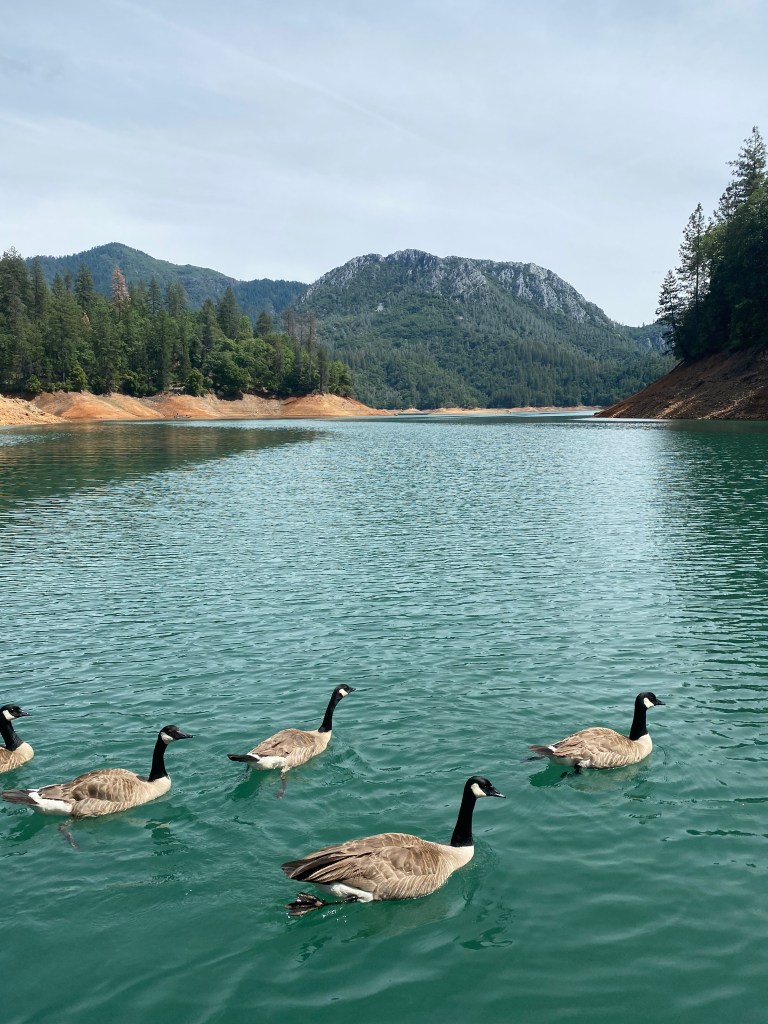
Shasta Lake (boat) – Shasta lake is, hands down, my favorite stop in Redding. Surrounded by jagged cliffs and canyons, Lake Shasta transports you to a different world entirely. It’s best during the spring and early/mid-summer when the water is still high, but warm enough to swim. The downside? To really enjoy what the lake has to offer, it’s best done by boat. I highly suggest spending the extra cash to rent a boat (if you have a boat license) or jetski. But there are also a few guided tours and dinner cruises available! Alternatively–
Shasta Caverns – Shasta Caverns is a unique cave known for the impressive formations inside including the “Crystal Room”. The Caverns require a boat-ride across Shasta Lake in order to access them, which is included in the price of the tour ticket.
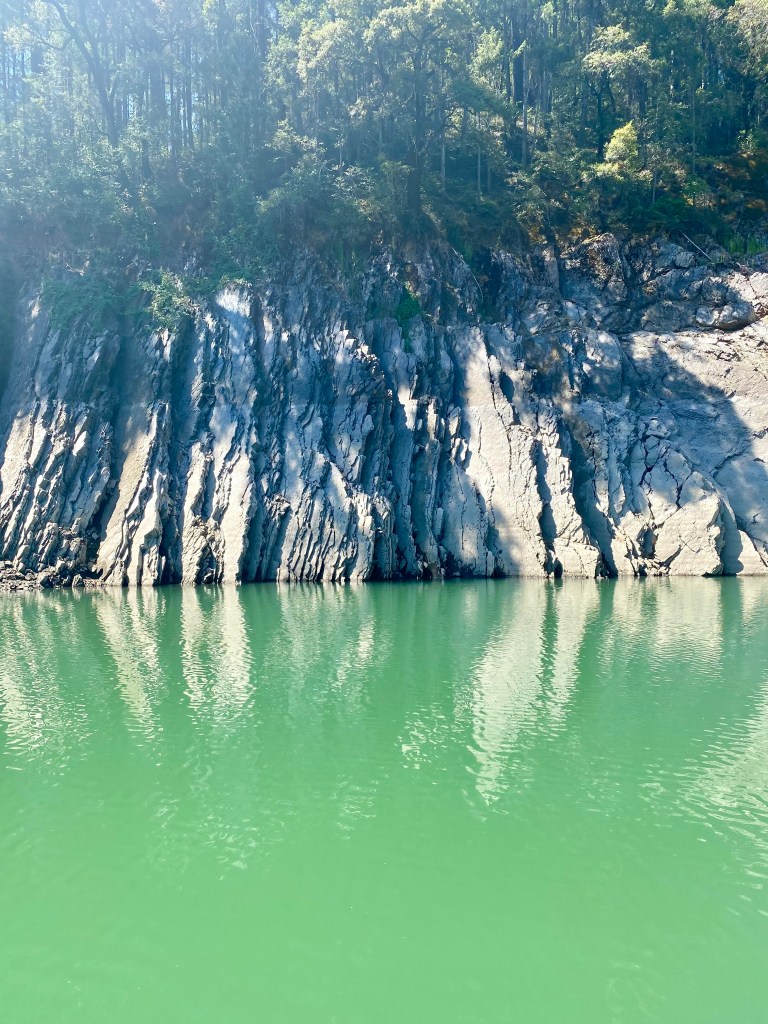
Sundial Bridge and Turtle Bay – Turtle Bay is a true Redding staple, right in the heart of town. Having grown up in Redding, I spent many a field-trip in these hallowed halls. The Turtle bay Museum has loads of charm, with historic exhibits, a small zoo, and a butterfly enclosure. From there, take a stroll across the iconic Sundial Bridge, and enjoy views of the Sacramento River. If weather permits, continue along the river trail.
Taste and See Creamery – The best ice cream I’ve ever had, point blank. Whenever I visit home, I go to Taste and See Ice Cream. It’s so creamy (word on the street is they use milk from a local farm, but that’s unverified) with a mix of unusual and traditional flavors.
Whiskeytown Lake – Another beautiful lake, though Shasta is superior in my opinio. Whiskeytown does not require a boat– enjoy a sandy shoreline and direct access to the water. If you happen to Scuba Dive, there is an old-west city at the bottom of the lake!
Where to stay
The Sheraton Redding – the nicest hotel in town by a mile, situated directly beside Turtle Bay.
The Inn at Shasta Lake – these rooms are nothing to write home about but it’s located steps from Shasta lake and surrounded by pine trees. The attached restaurant has a new chef and the food is divine.
Hope Inn – limited rooms in a large home set along beautiful gardens. The Hope Inn is well-kept and clean, welcoming, and all too peaceful.
Food Recommendations
-Theory Coffee
-De Ja Vu for brunch
-Nello’s
-Niu Hawaiin BBQ
-Moonstone Bistro
-Pipeline Craft Taps and Kitchen
-Burrito Bandito
-Taste and See Ice Cream
WELLNESS activities AND TIPS
Redding is hot in the summer time (think 110+ in July and August). It’s a dry heat, so it’s bearable, but make sure to pack appropriate summer clothes, sunscreen, and hats. Drink water often. Everywhere in Redding has A/C, so take advantage!
Urban Retreat Day Spa – Looking for a spa experience without the city price tag? Look no further. Make sure to check out their Specials, there’s always a good deal.
Biking, hiking, walking – Check out the River Trail located right next to Turtle Bay Museum. Great for biking, a run, or a leisurely walk. There are plenty of hiking trails in the area as well!
Day 5 – The Coast
Start: Redding
Mid-point stop: Patrick’s Point
End: Eureka
Drive time: 3 hours
What to do
Weaverville– make a pitstop in Weaverville, CA, a well-preserved 19th century gold mining town. Walk around downtown and admire the historical charm and local shops. Hit up Trinity Bistro and Deli for good food and clean bathrooms.
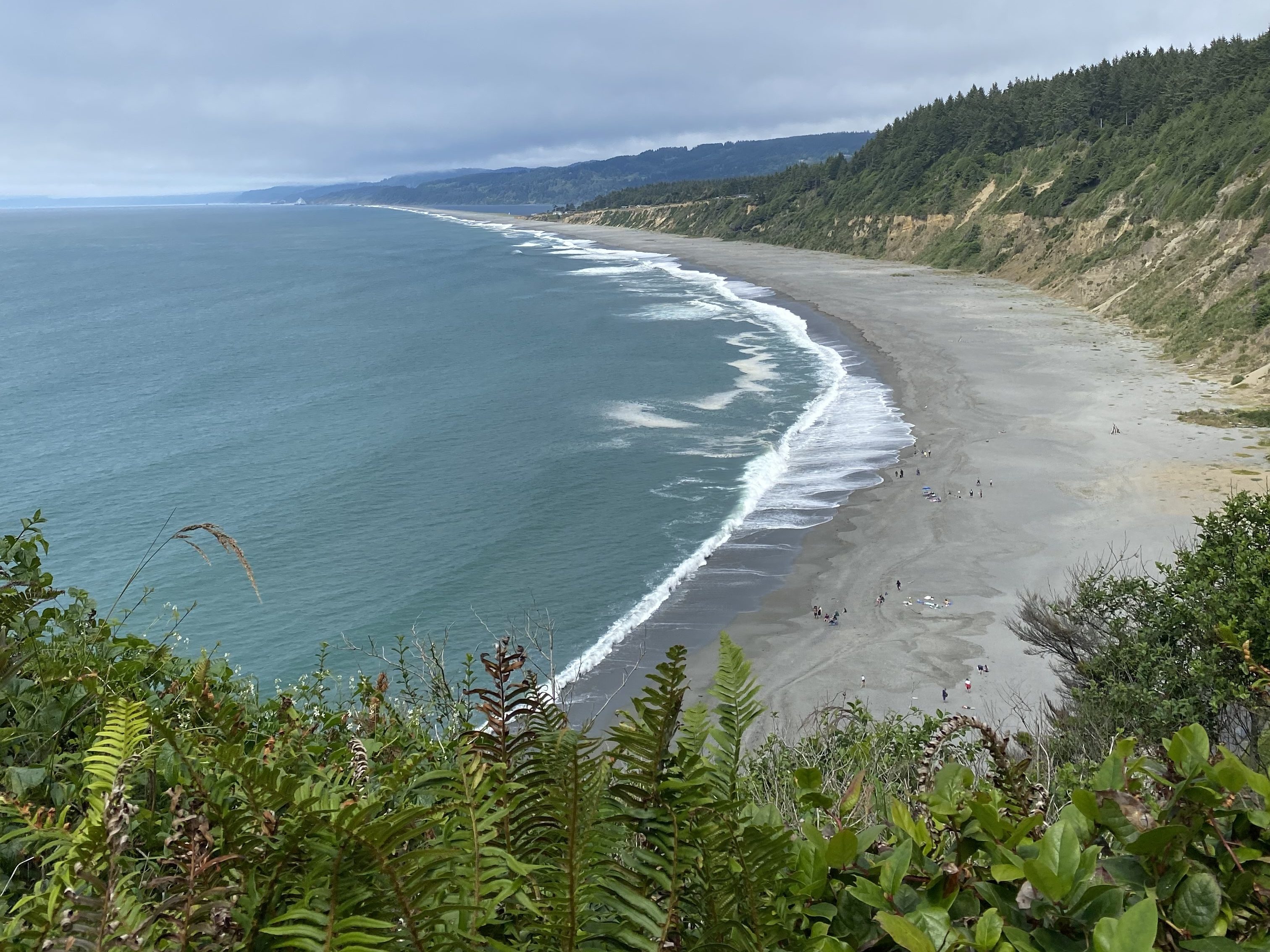
Patrick’s Point – There are so many great spots at Patrick’s Point, but the must-sees are Agate Beach and Wedding Rock. Wedding Rock offers incredible sunset views– and yes, people really do get married there (it was my childhood dream). Agate Beach is a beachcomber’s paradise, filled with agates, smooth rocks, and a laid-back vibe. Keep in mind that Northern California beaches tend to be more rainy and foggy than those further south, so come prepared for chillier, misty weather.
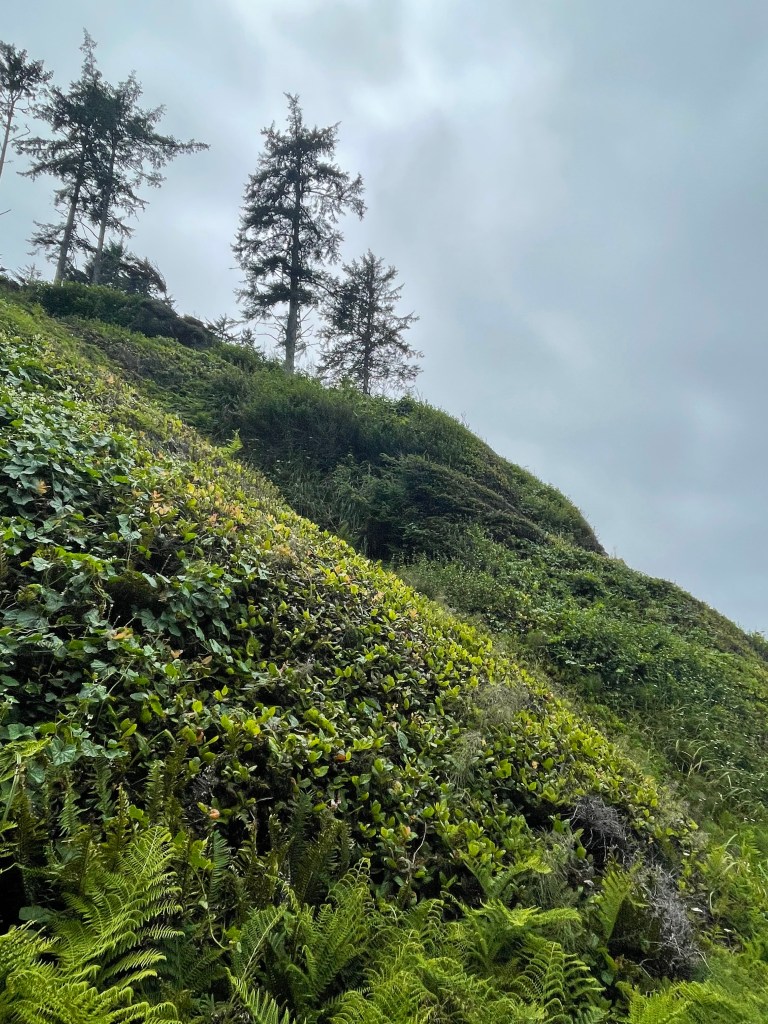
Fern Canyon – From Patrick’s Point, make the 25 minute drive up to Fern Canyon. The Fern Canyon Trail (1 mile, easy loop) is enclosed by dramatic rocks creating a long corridor and covered in verdant moss and ferns. It’s perfect for a photo-op.
Redwood National Park – Hike to the tall trees grove (moderate-strenuous), visit Big Tree Wayside, or enjoy a leisurely drive through the Newton B. Drury Scenic Parkway.
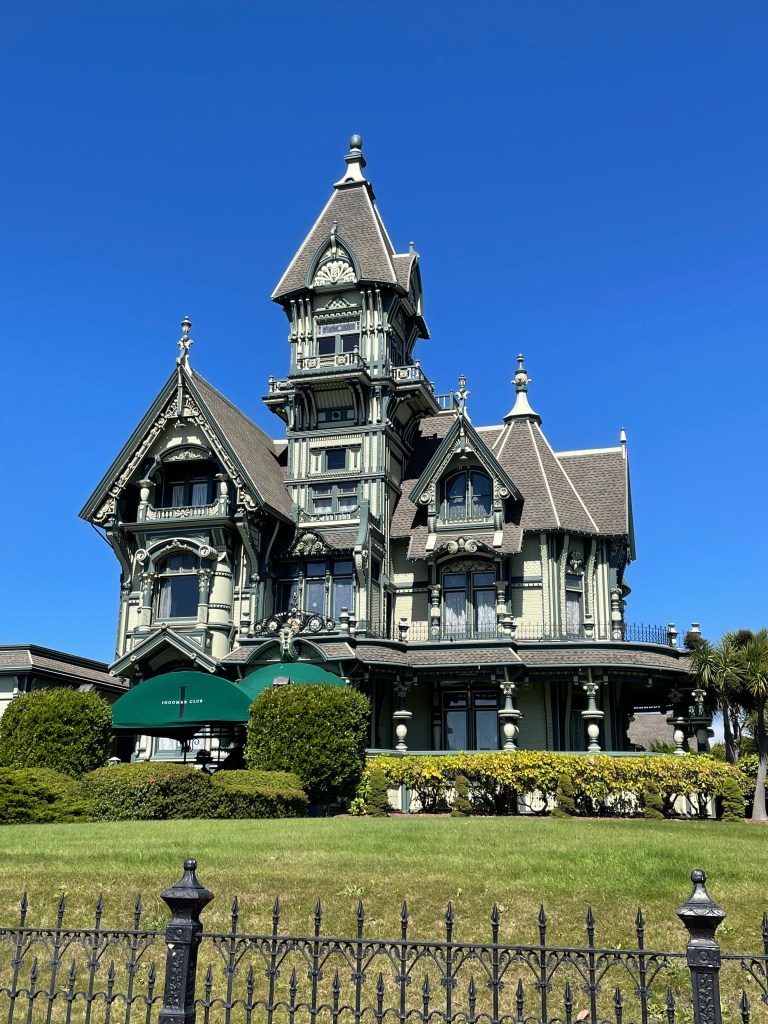
Downtown Eureka – step back in time and stroll through the Victorian neighborhoods of Eureka, find the Carson House on the hill to end your self-guided tour.
Where to stay
The Front Porch Inn – Offering unique, lush grounds in a lovely cabin setting. My favorite part are the Saunas and hot tubs, ideal after a long day of traveling and hiking.
The Best Western Humbolt Bay Inn – A great “budget”, modern hotel. Surprisingly, it has a very happening pool and resort area– great in the summer time.
The Lost Whale Inn – If you prefer to stay near Patrick’s Point, this oceanfront B&B is top of the list. With ocean-views from nearly every room and a spa that looks out over the cliffs, it makes for a serene stay.
The Carter House Inn – If you want to keep the Victorian theme alive, enjoy a stay in the Carter House Inn—a renovated Victorian home in downtown Eureka.
FOOD RECOMMENDATIONS
-Pile High Deli
-Bayside Farmstead Cafe (Arcada)
-Renata’s Crepeire
-Larrupin Cafe (Patrick’s Point)
-Annie’s Cambodian Cuisine
-Cocina Mariposa
Wellness ACTIVITIES and Tips
Secluded beaches – If you’re willing to explore, there are so many quiet beaches in the area, even in the summer-time! Hidden beach is an ideal spot for meditation and reflection.
Redwood Guide – A naturalist based in the Humboldt Redwoods. Justin is an incredibly knowledgeable, well-regarded naturalist in the Eureka area, offering tours through the redwood forest. He’s also a certified Forest Therapy Guide offering Forest Bathing experiences. His tours can be tailored to your desired redwood experience.
DAY 6 – Redwoods
Start: Eureka
End: Sonoma
Drive: 4.25 hours (start early!)
What to do
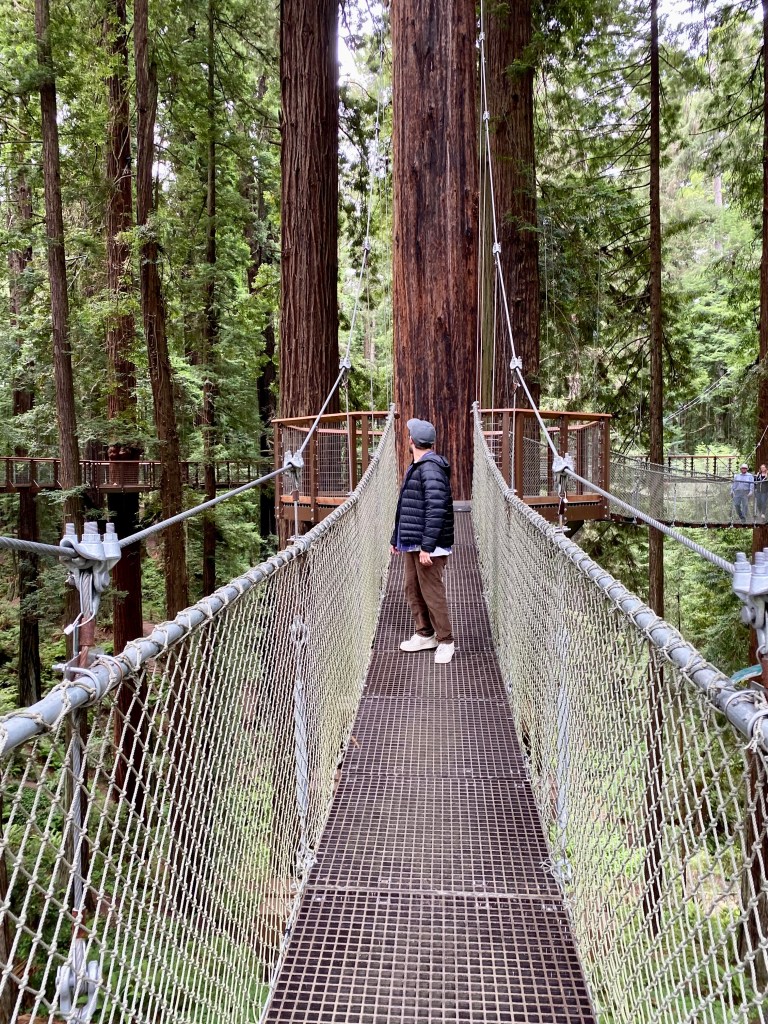
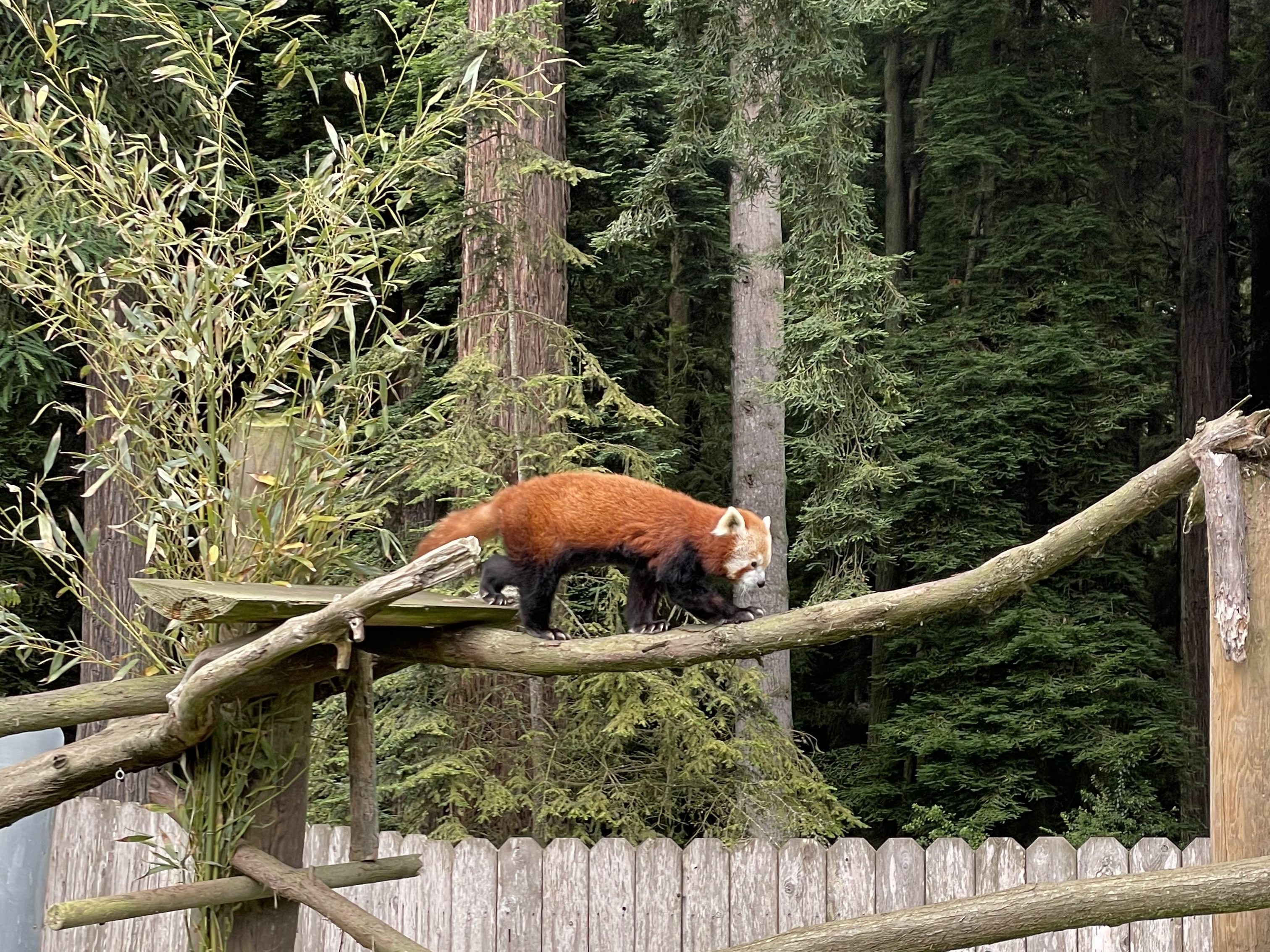
Sequoia Park Zoo and Skywalk – For animal and nature lovers, you really must stop at Sequoia Park Zoo. The zoo, though modest, has plenty to keep you entertained for an hour or two (including red pandas!). The Skywalk, included in your zoo-ticket, is a do-not-miss. Walking through the redwood trees, so high above the ground, is a meditative treat and a perspective you won’t get anywhere else on the northern coast.
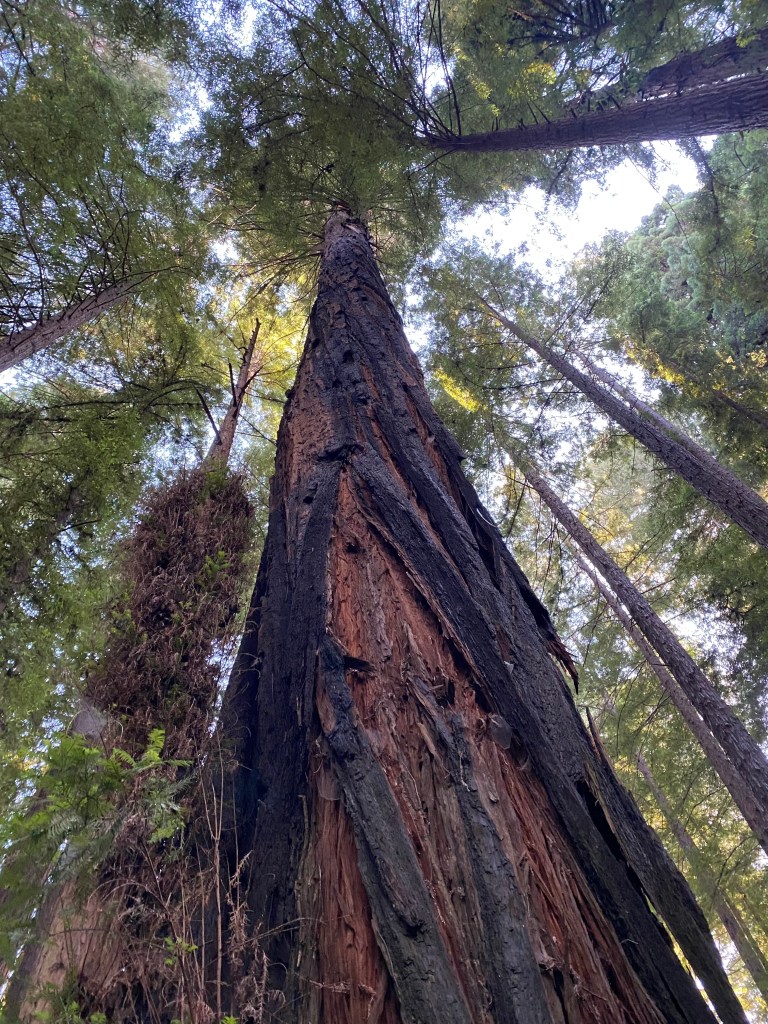
Avenue of the Giants – Your drive from Eureka to Sonoma is a long one (about 4 hours), but lucky for you, there are plenty of jaw-dropping stops along the way– most notably, the Avenue of the Giants. It’s the most scenic road through the redwood forest, and considered one of the finest forest drives in the world! Iconic stops include:
- The Founder Grove (including the famous giant tree).
- The Drive-thru tree park
- Little towns along the way (Garberville, Myers Flatt, Philipsville, etc).
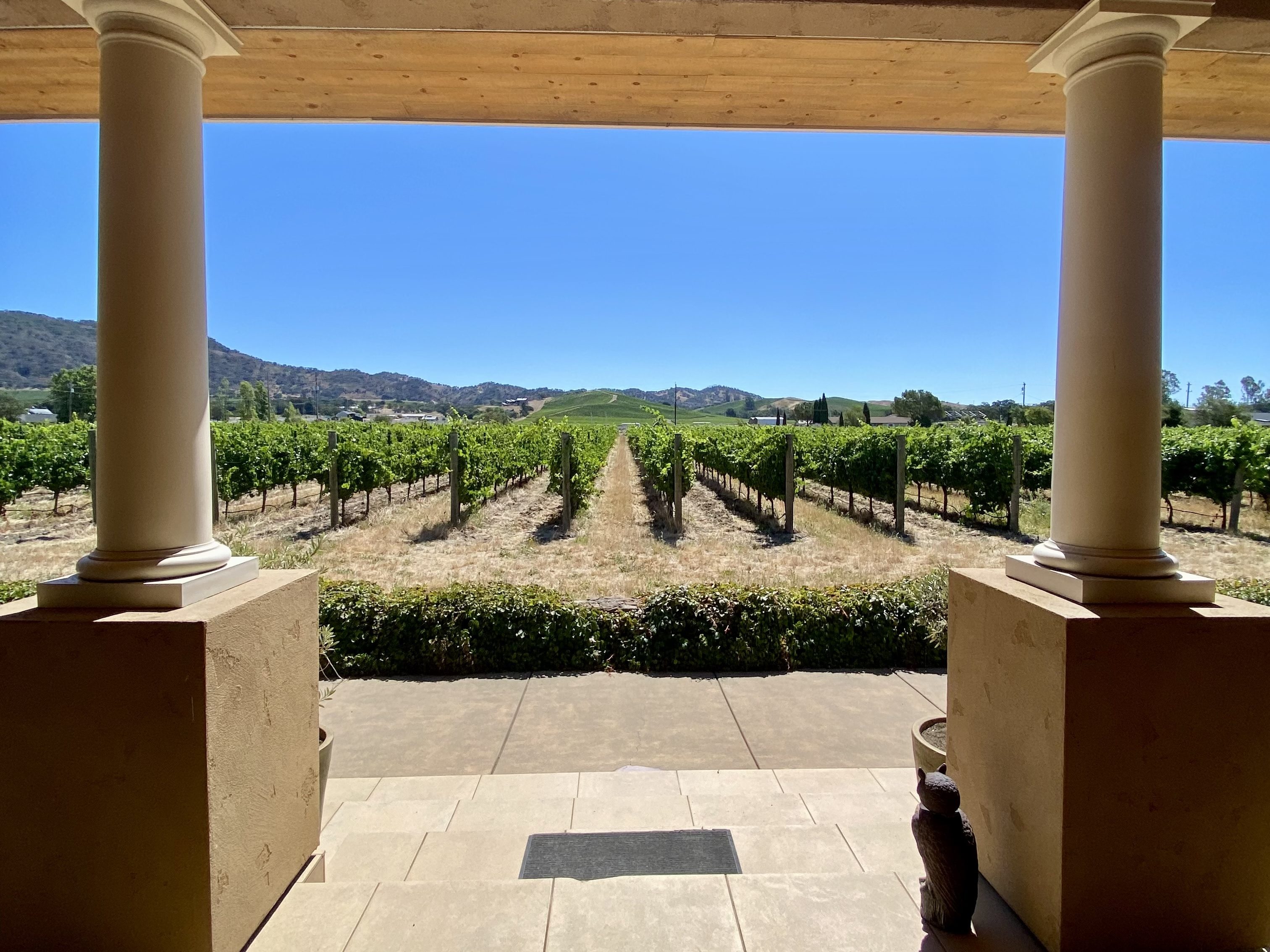
Wine Tasting in Sonoma – A stop in Sonoma would not be complete without a little winery hopping. Though most wine-tasting takes place in the early afternoon (1-5 pm, make sure to make reservations in advance!), there are wineries open past 5 pm. If you reach sonoma in the afternoon, I highly recommend:
- Scribe Winery
- Bedrock Wine Co
- Hamel Winery
Where to stay
Sonoma is a bit of an odd bird when it comes to lodging. There are a handful of places to stay in Sonoma itself, but accommodations expand as far as an hour away in every direction.
Montage Healdsburg – For a more luxurious stay, the Montage Healdsburg is a fantastic, modern choice. Though Healdsburg is an hour away from the Sonoma town center, it’s a very popular area to unwind. Expect a higher price take, but plenty of curb-appeal and wineries nearby.
Petaluma – A region closer to town (about 20 minutes away from Sonoma town center). In my opinion, it’s just as beautiful as Healdsburg or Sonoma proper, but without the price tag. It’s often called the “foodie capital” of California, and you’ll be overwhelmed by restaurant options. Hotel Petaluma and The Metro Hotel are both good, moderately priced lodges in the area.
Cottage Inn and Spa – For a relaxing stay in the heart of Sonoma, you can’t go wrong with Cottage Inn and Spa. They even bring you fresh pastries in the morning. It’s a romantic oasis.
Food recommendations
Glen Ellen Star
Spread Kitchen
Cafe La Haye
Sweet Scoops Ice Cream
El Molino Central
The Girl and the Fig
WELLNESS ACTIVITIES AND TIPS
Sonoma Healing Oasis – Known for their unique wellness therapies, including custom massage experiences (like aquatic massages), Raindrop therapy, and a hot tub and infrared sauna included with your session, Healing Oasis is a mom-and-pop boutique wellness haven. Do note, they’re only open from May-October and by appointment only.
Harbin Hot Springs Retreat Center – A rustic geothermal hot spring with a multitude of offerings including sunbathing, meditation, sound baths, yoga, and spa sessions. Every day has a new offering, class, or movie night! Note that the geothermal pools are clothing optional.
Tierra Vegetables – A beloved farmstand in Santa Rosa, selling a bounty of seasonal produce straight from their orchards. Run by a local family, it’s a true labor of love.
Birdwatching – Sonoma is renowned for its birdwatching opportunities. Take a few hours to stroll through Sonoma Creek or Bodega Bay and immerse yourself in the wildlife.
DAY 7 – Travel Home
Start: Sonoma
End: Sacramento
Drive: 2 hrs
Sadly, all good things must end! Make the two hour trip back to Sacramento to catch your flight back home and dream about when you can return!
TIP: If you’re flying in from somewhere in California, consider flying out of the Sonoma airport instead of Sacramento! It’s a small, regional airport that offers reasonably priced flights all over the state.
ENJOY!
I hope you have an unforgettable adventure on this ultimate Nor-Cal roadtrip! Be sure to check out my other detailed itineraries to help you make the most of your next journey.
-L
 Elle Well Traveled
Leave a comment